What Interest Rate to Expect on a Car Loan After Bankruptcy
Real rate ranges by credit tier, what actually moves the number, and how to avoid overpaying on your first post-bankruptcy auto loan.
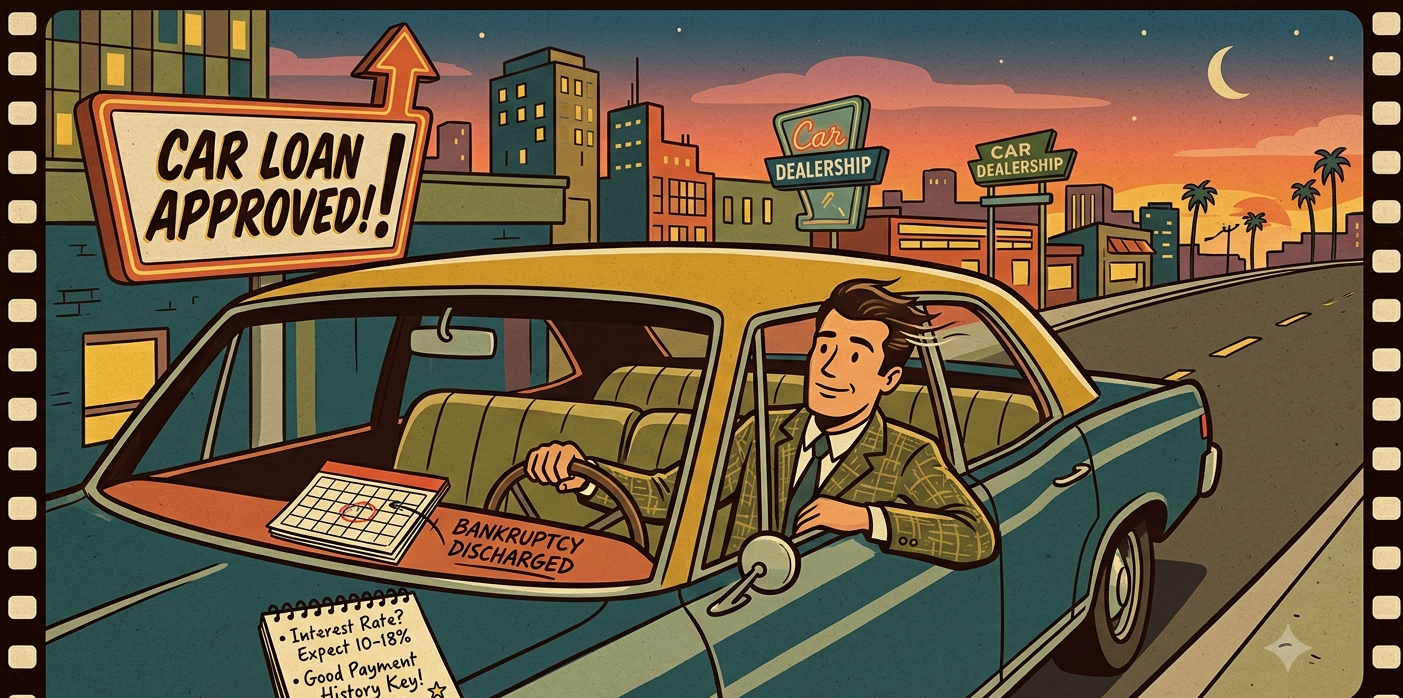
Quick answer: Most Chapter 7 or Chapter 13 filers can expect an APR somewhere between roughly 10% and 25% in the first year after discharge, depending heavily on credit score, down payment, and loan term. Borrowers who land in the “deep subprime” tier (below about 500) often see rates in the high teens to low 20s on used vehicles, while those who’ve rebuilt into the 600s can qualify closer to 10–13%. The number is rarely fixed — it moves fast as your score climbs, so the loan you get today isn’t the loan you’re stuck with for its full term.
If you’re shopping for a car loan with a bankruptcy on your file, the interest rate question is usually the first one that matters — and the hardest one to get a straight answer on. Every lender prices risk a little differently, and most rate quotes you’ll find online are either national averages that don’t reflect your bankruptcy specifically, or marketing numbers from a lender trying to get you in the door. Here’s what the actual data says, and what you can do to land on the better end of the range.
1What Actually Determines Your Rate
A bankruptcy on your credit file matters, but it isn’t the only number a lender looks at. Auto lenders price loans using a handful of factors, and it’s worth knowing which ones you can still influence today:
- Your current credit score — not your score at the time you filed. Scores typically bottom out around the filing and begin climbing within months if you’re managing new credit responsibly.
- Time since discharge. Many lenders price loans more aggressively in the first 12 months after discharge and ease up as more distance builds between you and the filing.
- Loan term length. A 36–48 month loan typically carries a lower APR than a 72-month term, since a longer term leaves the lender exposed for more years while the car depreciates.
- Down payment size. Financing 100% of a vehicle’s value with no cash down is the highest-risk structure for a lender; a meaningful down payment often unlocks a noticeably better offer.
- Debt-to-income ratio and income stability. Steady, verifiable income reassures a lender even when the score alone looks rough.
- Vehicle age and type. Newer vehicles with more remaining useful life typically qualify for better terms than older, higher-mileage used cars.
2Average Car Loan Rates After Bankruptcy, by Credit Tier
Auto lenders generally price loans in tiers based on credit score, and a recent bankruptcy usually places borrowers in the lower tiers — at least at first. Based on recent industry rate data across credit tiers, here’s roughly what to expect:
| Credit Tier | FICO Auto Score Range | Typical New-Car APR | Typical Used-Car APR |
|---|---|---|---|
| Super Prime | 781–850 | ~5% | ~7% |
| Prime | 661–780 | ~7% | ~9% |
| Nonprime | 601–660 | ~10% | ~14% |
| Subprime | 501–600 | ~13% | ~19% |
| Deep Subprime | 300–500 | ~16% | ~22% |
The average credit score right after a bankruptcy discharge tends to fall in the low-500s — squarely in the subprime-to-deep-subprime range. That’s the reality behind why so many post-bankruptcy quotes land between 15% and 25% APR, particularly on used vehicles financed in the first year. It’s not a reflection of you personally; it’s how the entire lending industry prices risk at that score band, bankruptcy or not.
Worth Knowing
Rates shift with the broader auto lending market too, not just your personal credit profile. Heading into 2026, industry forecasters expect average auto loan rates to ease slightly as the Federal Reserve continues gradual rate cuts — a modest tailwind, though not enough on its own to offset the premium a recent bankruptcy adds to your quote.
3Does Chapter 7 vs. Chapter 13 Change Your Rate?
Not directly — lenders price primarily off your current credit score and file status, not the chapter you filed under. But the practical paths differ:
- Chapter 7: There’s no legal waiting period after discharge. You can apply for financing immediately, though many lenders informally prefer to see 12–24 months of post-discharge history before offering their better rates.
- Chapter 13: If you’re still inside an active repayment plan, financing a vehicle typically requires your attorney to file a motion with the bankruptcy court and get trustee approval — a process that usually takes a few weeks and requires the loan terms to be reasonable relative to your repayment plan.
4New vs. Used: Which Gets the Better Rate?
New vehicles almost always carry lower APRs than used ones at every credit tier, often by 3 to 6 percentage points. That’s partly because new-car loans are frequently subsidized by manufacturer financing arms competing for market share, and partly because a new vehicle depreciates more predictably, giving the lender a clearer collateral value. If your budget allows it, a lower-mileage newer used vehicle from a mainstream model year often lands you a meaningfully better rate than an older, high-mileage option — even at a similar purchase price.
5Six Ways to Improve Your Rate
- Pull your credit report and dispute errors first. Inaccurate negative items can silently drag your score down and push you into a worse pricing tier than you actually qualify for.
- Save for a larger down payment. Even 10–20% down meaningfully changes how a lender views the loan’s risk.
- Choose a shorter loan term if the payment fits your budget. 36–48 months typically prices better than 72–84 months.
- Add a qualified co-signer. A co-signer with strong credit can shift a loan’s pricing meaningfully closer to a standard-credit offer — though both signers share the risk if payments are missed.
- Shop multiple lender types in a short window. Rate shopping across a 14-day period is generally treated as a single inquiry by scoring models, so comparing offers doesn’t have to cost you additional score points.
- Wait if you genuinely can. Every additional month of on-time payments after discharge tends to move you toward a better pricing tier — though for many filers, needing reliable transportation now outweighs waiting for a marginally better rate later.
6Comparing Your Lender Options
| Lender Type | Typical Rate Range | Worth Knowing |
|---|---|---|
| Credit Unions | Often the lowest available for your tier | May require membership and more documentation; worth checking first |
| Subprime Specialty Lenders | Mid-to-upper range for your tier | Built specifically for post-bankruptcy and bad-credit borrowers; usually the most realistic approval path in year one |
| Traditional Banks | Varies widely; often declines soon after discharge | Many simply won’t approve a recent bankruptcy at all, regardless of rate |
| Buy-Here-Pay-Here Dealers | Highest in the market | Easiest approval, but often the most expensive financing available — see caution below |
A Note on Buy-Here-Pay-Here Dealers
Buy-here-pay-here lots finance the vehicle themselves rather than through a bank, which makes approval easier — but it also means there’s little competitive pressure keeping the rate reasonable. These loans frequently carry some of the highest APRs in the market, and many buy-here-pay-here lenders don’t report payments to the credit bureaus at all, which means months of on-time payments may do nothing to rebuild your score. If credit rebuilding is part of your goal, confirm bureau reporting before signing anything.
7How Fresh Start Now Helps You Get a Better Offer
Rather than sending you to a single lender or a buy-here-pay-here lot, Fresh Start Now matches filers with a network of vetted affiliate dealerships and subprime specialty lenders that are set up specifically to work with active and recently discharged bankruptcy filers. Many of our affiliate lenders report to all three credit bureaus, so on-time payments can actually count toward rebuilding your score — not just toward paying off the car.
Because our affiliate network includes multiple lenders competing for your loan rather than a single dealership’s in-house financing, filers often see meaningfully better offers than what a single buy-here-pay-here lot would present as a first (and only) option.
8Frequently Asked Questions
What’s a realistic car loan interest rate right after Chapter 7 discharge?
Most filers see offers somewhere between 10% and 25% APR in the first year, depending heavily on credit score, down payment, and loan term. Deep subprime scores tend to land at the higher end of that range, particularly on used vehicles.
Will my interest rate improve over time?
Yes, typically. As your credit score recovers — often through on-time payments on the very loan you take out now — you become eligible for better pricing, either through a future refinance or your next vehicle purchase.
Should I wait to buy a car until my credit improves?
It depends on your situation. Waiting can mean a better rate, but a well-chosen post-bankruptcy auto loan that reports to the credit bureaus can actually help your score recover faster — and many filers need reliable transportation immediately for work or family obligations.
Do all post-bankruptcy auto lenders report payments to credit bureaus?
No. This varies significantly by lender, and it’s one of the most important questions to ask before signing, especially with buy-here-pay-here dealers, some of which don’t report at all.
Can refinancing lower my rate later?
Often, yes. Once your credit score has improved and you’ve built a track record of on-time payments, refinancing your existing auto loan can secure a lower rate and reduce your monthly payment or total interest cost.
See What Rate You Could Actually Qualify For
Fresh Start Now matches Chapter 7 and Chapter 13 filers with vetted affiliate dealerships and lenders competing for your loan — not a single buy-here-pay-here offer.
Rate ranges are directional estimates based on recent industry credit-tier data and are not a quote, guarantee, or offer of credit. Actual rates vary by lender, state, vehicle, and individual application details. This article is for general educational purposes and is not financial or legal advice.